
If you love to bake, you’ve probably obsessed over flour brands, egg temperatures, and whether European-style butter really makes flakier croissants. But here’s a question more home bakers are starting to ask:
Does baking with A2 protein milk and butter actually change the results?
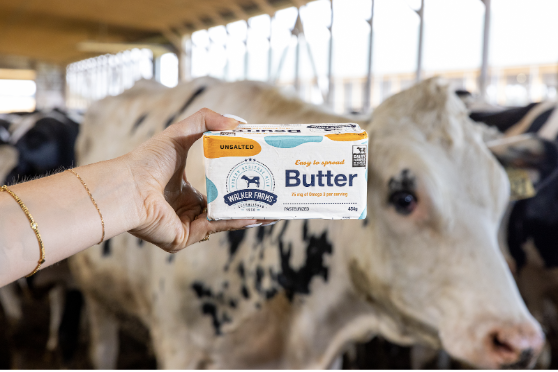
At Walker Farms, where we craft our dairy from cows that naturally produce only the A2 beta-casein protein, we’ve heard this question again and again. So we decided to explore it the best way we know how, by baking.
Let’s break down what happens when you swap conventional dairy for Walker Farms A2 protein butter and milk in three classic categories: cakes, breads, and custards.
First, What’s Different About A2 Protein Dairy?
Traditional milk contains a mix of A1 and A2 beta-casein proteins. A2 protein milk comes from cows that produce only the A2 protein, the original form of beta-casein found in older cattle breeds.
While many people choose A2 protein dairy for digestive comfort, bakers are discovering something else:
It may subtly influence texture, structure, and flavor.
Not dramatically. Not magically. But noticeably.
1. Cakes: Tender Crumb & Clean Flavor
We tested a classic vanilla butter cake using:
- Standard supermarket butter and milk
- Walker Farms A2 protein butter and A2 protein milk
What We Noticed
Texture:
The cake made with Walker Farms butter had a slightly finer crumb and felt more tender when sliced. The emulsion during creaming seemed smoother, producing a lighter batter.
Rise:
Both cakes rose well, but the A2 protein version held its structure beautifully — less collapsing at the center after cooling.
Flavor:
This was the most interesting difference. The A2 protein butter delivered a clean, creamy finish without the slightly heavy aftertaste some butters leave behind.
Verdict for Cakes:
If you’re baking celebration cakes, layered sponges, or pound cakes, A2 protein butter enhances tenderness and keeps flavors bright and balanced.
2. Breads: Structure Meets Softness
Bread baking is all about protein interaction, gluten formation, moisture retention, and fat distribution.
We tried two tests:
- Soft dinner rolls
- Enriched sandwich bread
What Changed?
Dough Handling:
Dough enriched with Walker Farms A2 protein butter felt pliable and smooth, incorporating more evenly into the gluten network.
Crumb Texture:
The final bread had:
- A soft but resilient structure
- Slightly improved moisture retention
Shelf Life:
Interestingly, the A2 protein-enriched loaves stayed soft a bit longer, likely due to how fat dispersed throughout the dough.
Verdict for Breads:
For brioche, milk breads, and dinner rolls, A2 protein butter helps create luxurious softness without compromising structure.
Why Does It Make a Difference?
While baking chemistry is complex, a few factors may explain the subtle improvements:
- Protein composition can influence how milk interacts with starches and eggs.
- Butterfat quality affects emulsification during creaming.
- Clean dairy flavor enhances recipes where milk is central.
It’s not about dramatic transformation. It’s about refinement.
Think of it like upgrading from good chocolate to great chocolate, your recipe doesn’t change, but the experience does.
Final Thoughts: The Subtle Upgrade
Baking is about details. The temperature of your butter. The precision of your measurements. The quality of your ingredients.
Swapping in Walker Farms A2 protein butter isn’t a gimmick, it’s a subtle upgrade that elevates texture, structure, and flavour in ways that serious bakers appreciate.